
Every growing household reaches the same question: do we add on, or do we move? There is no universal answer, because the right choice depends on what you are actually trying to fix. Weighing a home addition vs moving gets much easier once you separate what your house lacks from what your location gives you.
Below are seven lessons from a recent project our team designed and built in Falls Church, Virginia: a two-story addition to a 1930s stone cottage. The home was full of character but short on space, and the homeowners chose to build on rather than leave. Here is how to work through the same decision for your own home.
1. Write Down What You Cannot Replace
Start with a list of what you love about where you live, not what annoys you about the house. Neighborhood, school district, a mature yard, the neighbors, the commute, and the character of the house itself are all things a move would leave behind. An addition keeps every one of them.
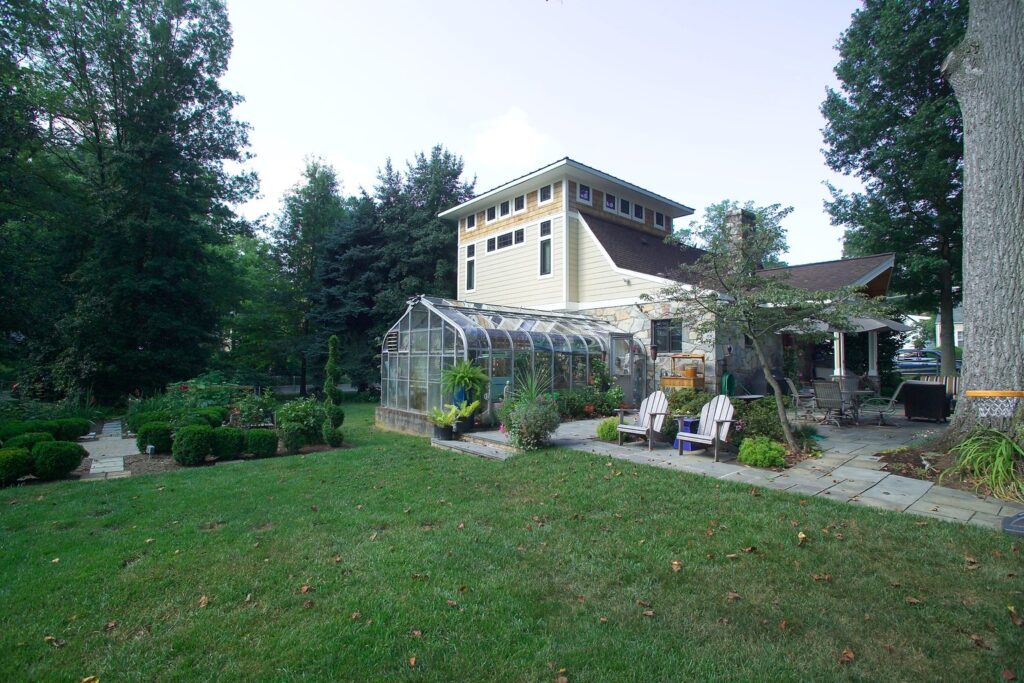
For a home like this one, the stone walls and settled garden are exactly what a move would give up. A 1930s cottage with that kind of character is not something you can order in a new house, so the goal was to give it room rather than replace it.
Try this: Make two lists: what you would miss about your address, and what your house does not do. If the first list is long and the second is mostly about space, an addition deserves a serious look.
2. Find Out What Your Property Will Support
An addition is only an option if your lot and your house can handle it. Setbacks, lot coverage, and the existing structure all shape what can be built, and the rules vary by jurisdiction. Guessing is the fastest way to fall in love with a plan that cannot be permitted.
That is why our design-build process starts with a site visit. In Discovery, our team walks the property, takes measurements, and gives you honest feedback on what is possible, including what a phased approach could look like. You learn what your lot will allow before you commit to a design.
3. Decide Whether to Build Up or Build Out
Adding space comes down to two directions. Building out uses more of your yard, while building up keeps the footprint and adds a floor. The right choice depends on how much yard you want to keep and what the existing structure and roofline can accommodate.
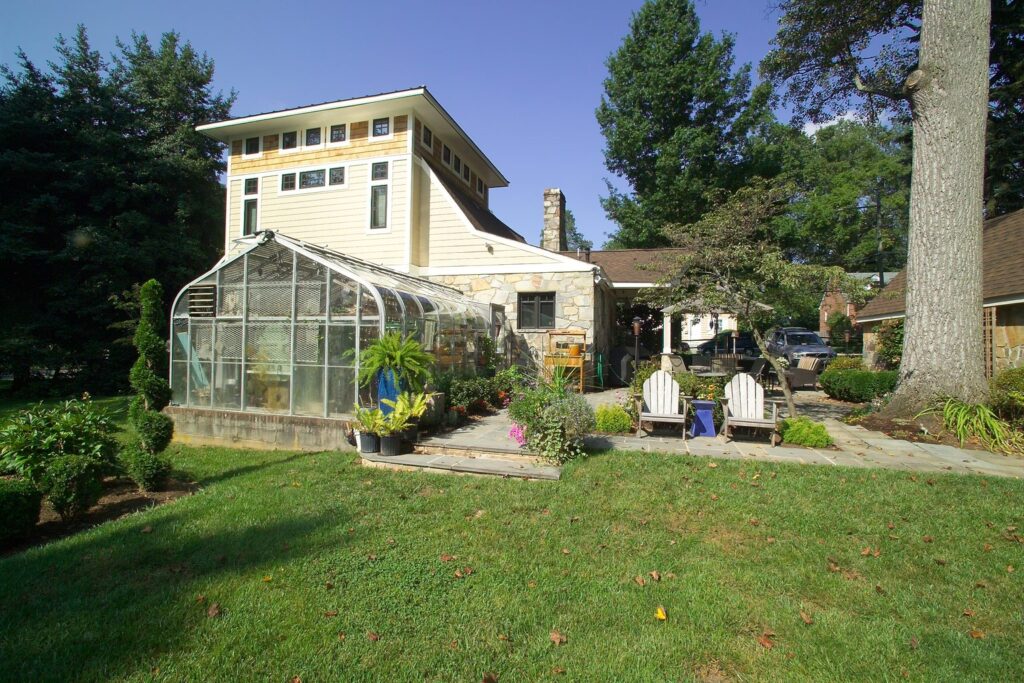
This project went two stories and still left the existing greenhouse and garden in place. The upper level holds a studio lit by wraparound clerestory windows, finished with a metal roof accent that gives the new silhouette its own character.
4. Make the New Space Look Like It Was Always There
The biggest risk of an addition is the bolted-on look: a new box with a different roofline, different materials, and no relationship to the house. Avoid it by matching materials, proportions, and details closely enough that the new section follows the original instead of competing with it.
On this cottage, our team hand-matched the fieldstone, used cedar shake and painted lap siding on the upper level, and rebuilt the chimney to extend to the new roofline. Every one of those choices ties the addition back to the 1930s house it joins.
Try this: Ask any builder you interview how they match masonry, siding, and rooflines on older homes, and ask to see a finished example.
5. Protect the Yard You Are Staying For
One reason to stay is the property itself. If a mature garden is part of what you love, construction should not erase it. Ask how a builder protects landscaping, access paths, and existing outbuildings, because the answer shows how carefully they plan the whole site, not just the new room.
On this project, our team protected the existing landscaping through construction, and the greenhouse and garden remain part of the finished backyard. Planning for that from the start is what keeps a long-loved yard from becoming a staging area.
6. Compare the Whole Picture, Not Just One Number
It is tempting to compare an addition with a house purchase as two price tags. The honest comparison is wider. A move means replacing the neighborhood, the yard, and a house you already know, and it still may not give you the layout you wanted. An addition shapes new space around how your family lives.
The number you can control is the addition itself. Slate issues a fixed-price contract once the design is finalized, so you know the cost before construction begins. We do not publish price ranges, because every property is different, but an evaluation of yours gives you a real figure to compare.
7. Choose One Team to Design and Build
Additions go wrong most often at the handoffs: the drawings do not match what can be built, or the designer and builder disagree about a detail halfway through. A design-build team removes those handoffs. One company plans the addition, builds it, and answers to you under a single contract.
That is how we work. Our in-house design team develops the plan, and the same company carries it through construction, so the details you approve are the details that get built. You can read more about our home additions in Northern Virginia.
The Decision at a Glance
Here is how common situations point toward an addition or a move:
| If this is true | It points toward | Why |
|---|---|---|
| You love your neighborhood, schools, and yard | Addition | None of these can move with you |
| Your house has character you want to keep | Addition | New space can be matched to the original |
| You are short on rooms, not on location | Addition | It adds exactly the space that is missing |
| Your lot or local rules limit expansion | Moving, or a smaller plan | A site visit shows what is allowed |
| The problem is the location itself | Moving | An addition cannot change your address |
Want to see how it turned out? Browse the photos and project details for this Craftsman-style second-story addition in Falls Church in our project portfolio.
Weighing an addition against a move? Our design-build team can tell you what your property will support. See how we handle home additions across Northern Virginia, then book a free design consultation for a no-pressure conversation about what’s possible for your home.
Home Addition vs. Moving FAQs
How do I know if my lot can support an addition?
Start with a site visit. Setbacks, lot coverage, and the existing structure all affect what can be built, and local rules differ by jurisdiction. During Discovery, our team measures your property and tells you honestly what is possible, so you can compare your options with real information.
Should I build up or build out?
Building out uses more of your yard, while building up keeps the footprint and adds a floor. The best choice depends on how much yard you want to keep, what your roofline and structure can support, and what you want the new space to do. A site visit usually settles it.
Is a home addition cheaper than moving?
It depends on your property, the size of the addition, and what you would be buying instead. The two are not like-for-like, so the fair comparison includes what you would give up by leaving. An evaluation of your project gives you a real number, and the fixed-price contract locks it in after design.
What if I am still undecided between adding on and moving?
That is a good time to talk. A free design consultation is a no-pressure conversation about your home, your family, and what an addition could look like on your property. You can compare what you learn with your other options before you decide anything.


