
Many kitchens look good in photographs and still feel cold when you walk into them. The cause is rarely one thing. It is usually a mix of all-white surfaces, cool metals, flat lighting, and nowhere for the eye to rest. Knowing how to make a kitchen feel warm means fixing those causes one at a time.
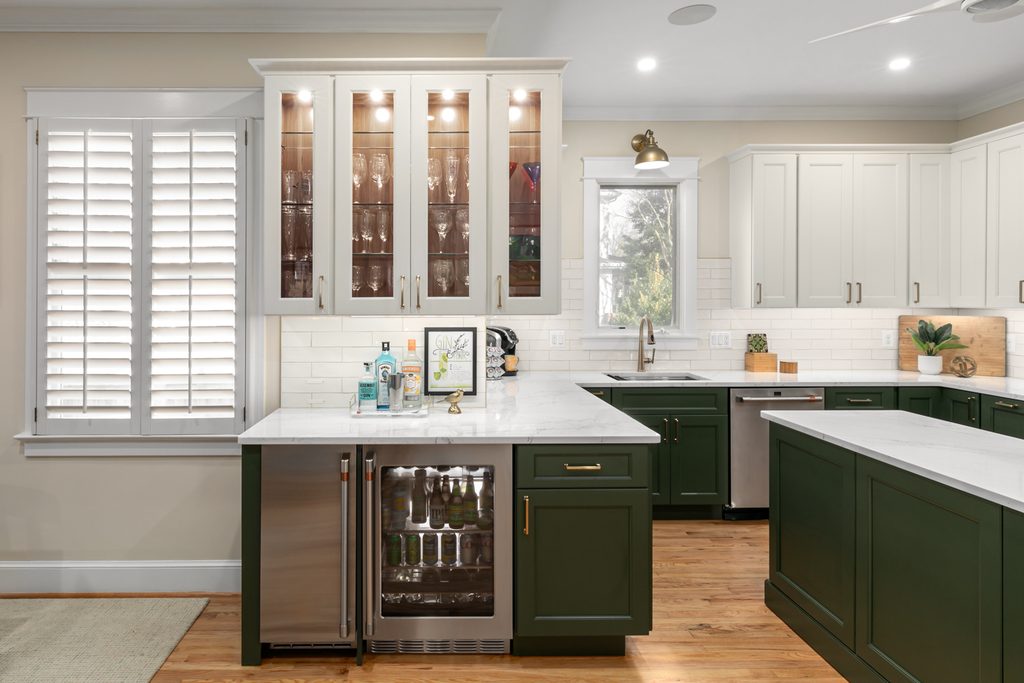
Below are seven lessons from a recent kitchen our team designed and built in Arlington, Virginia. The homeowners wanted a classic, English-cottage feel that still worked for a busy household, and they wanted the warmth to continue into the foyer and powder room. Here is how we approached it, and how you can apply the same ideas.
1. Put the Deep Color Low and the Light Color High
A deep cabinet color can warm a room without making it dark, as long as it sits in the right place. Put the heavier color on the bottom and keep the lighter color above eye level. The room stays bright, and the color grounds the space instead of closing it in.
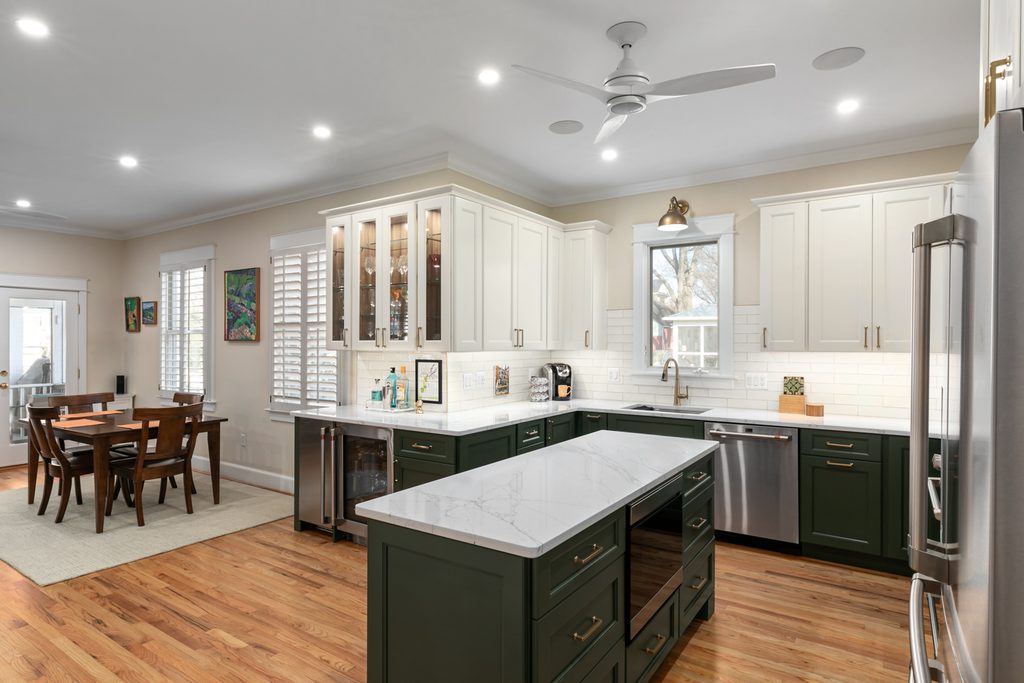
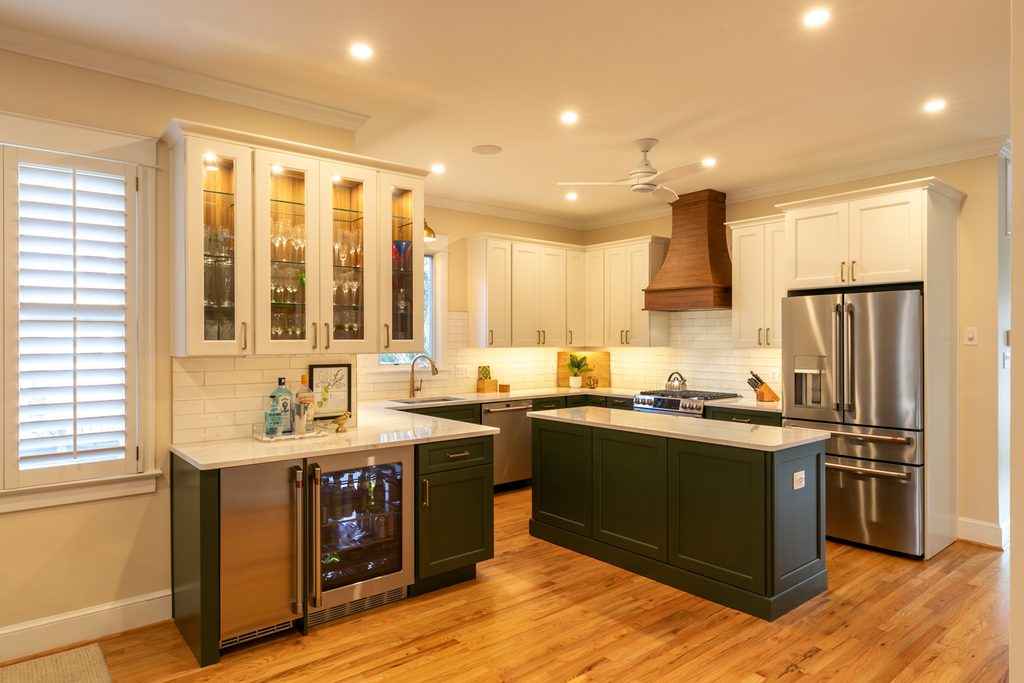
Here, a deep hunter green covers the base cabinets, the island, and the beverage bar. Soft white cabinets hold the upper walls. The result feels like a classic cottage kitchen rather than a showroom. For help choosing a style, see our step-by-step guide to selecting cabinets.
Try this: Hold a deep swatch near the floor and a light one at eye level before you commit. Seeing them at their real heights tells you more than seeing them side by side.
2. Make Wood the Centerpiece, Not an Afterthought
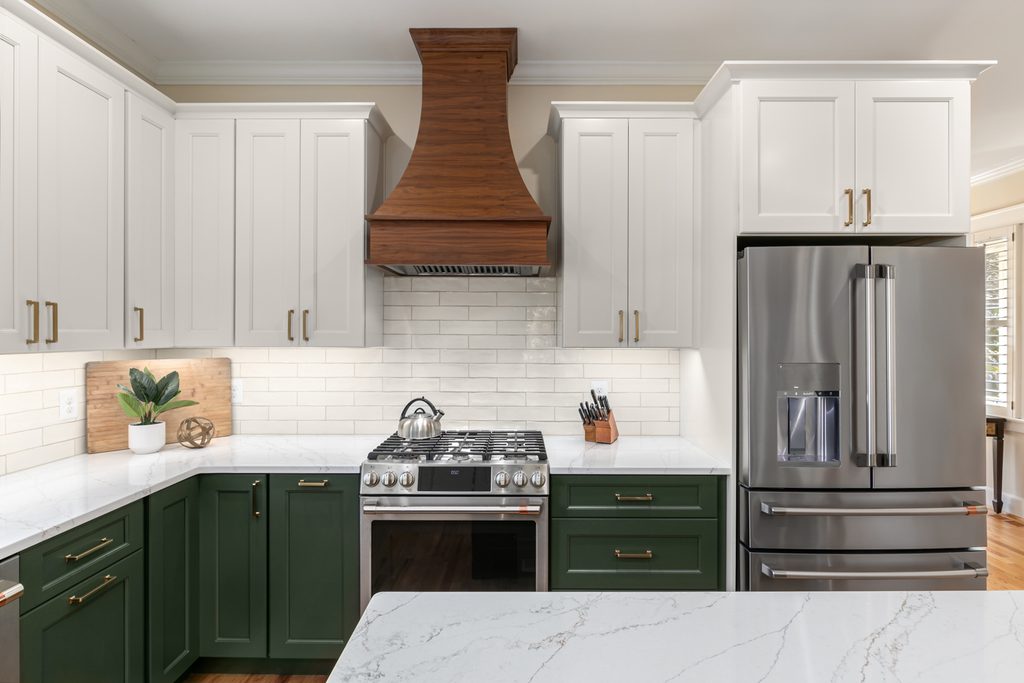
Wood is the fastest way to warm a kitchen, but a small touch rarely does enough. Give it a job big enough to notice. A stained wood hood, a wood island, or a continuous wood floor all count, as long as the wood is clearly part of the design.
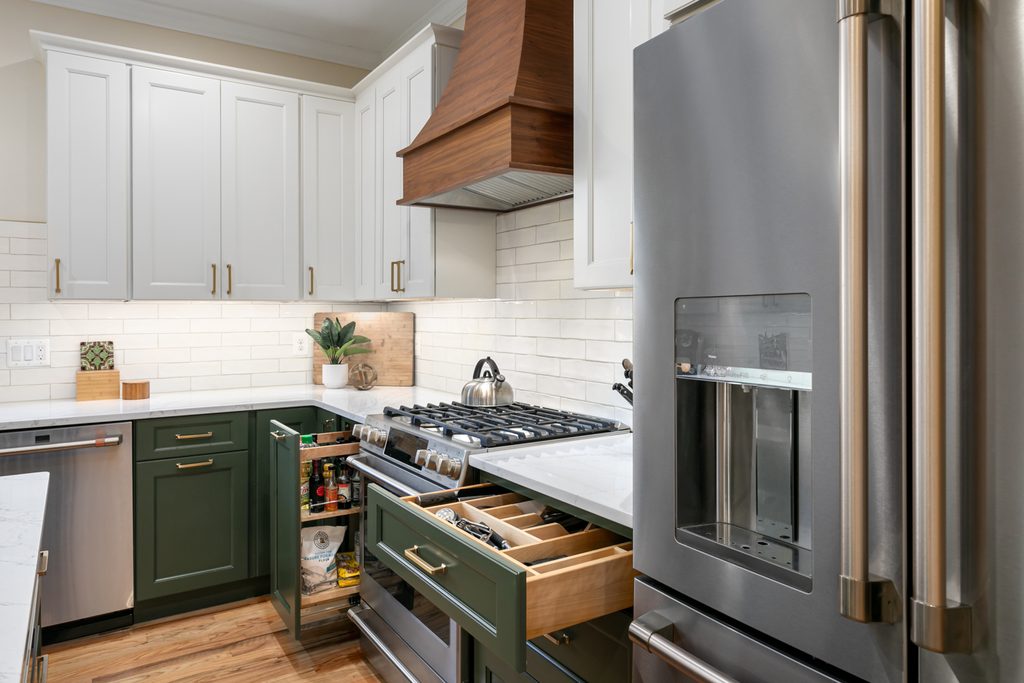
The range hood here is finished in a walnut stain and built in the same cabinet line as the rest of the kitchen, so it reads as furniture rather than a stainless box. Natural oak floors run beneath it. We cover more hood options in our kitchen hood style guide.
3. Swap Cool Metals for Warm Ones
Chrome and polished nickel can chill a kitchen even when everything else is warm. Bronze and brass tones do the opposite. They pick up the wood and the color around them and tie the room together without calling attention to themselves.
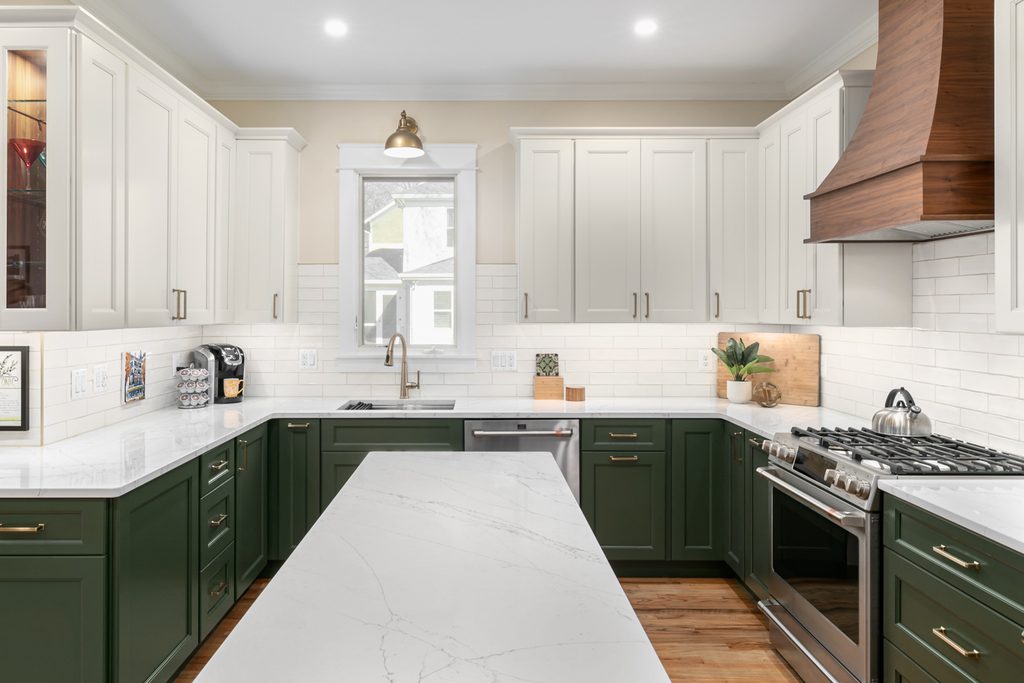
This kitchen uses honey bronze pulls on the cabinets and a champagne bronze pull-down faucet at the island. The metals are quiet, but the room would feel noticeably cooler without them.
4. Let a Simple Tile Support the Colors
When the cabinets and wood carry the personality, the backsplash should step back. A classic shape in a quiet finish lets the color and grain lead. A busy pattern next to a deep green cabinet or a stained hood would compete with both.
We used a classic 3×12 subway tile from the counter up to the upper cabinets. It is traditional enough to suit the cottage style and plain enough to keep the green and walnut in focus. Our backsplash tile ideas show more options.
5. Light the Room in Layers
Warm kitchens glow instead of glare, and that takes more than one ceiling light. Layer several sources, each with its own job. This kitchen is lit in four layers:
- Recessed lights: new fixtures throughout the main level, including the kitchen, give even overall light.
- Under-cabinet lights: LED strips put light exactly where you prep.
- Display lighting: puck lights inside the glass-front cabinets make the homeowners’ stemware glow.
- A wall sconce: a fixture above the kitchen window adds a soft accent.
6. Give Guests a Place to Gather Outside the Cook Aisle
A warm kitchen invites people in, and people need somewhere to be. If every guest stands in the cooking aisle, the room feels tense instead of welcoming. Give company a destination of its own, away from the range and the sink.
Here, a corner beverage bar stacks an undercounter beverage refrigerator next to a matching undercounter ice maker, in the same green cabinetry as the main run. It uses a corner that would otherwise go unused, so drinks are handled without borrowing space from the main cook aisle.
7. Carry the Warmth Through the Front of the House
A warm kitchen feels warmer when the rooms around it agree with it. If the kitchen glows and the foyer feels like a different house, the effect is lost. Repeat two or three materials in the next rooms, and let each room add its own twist:
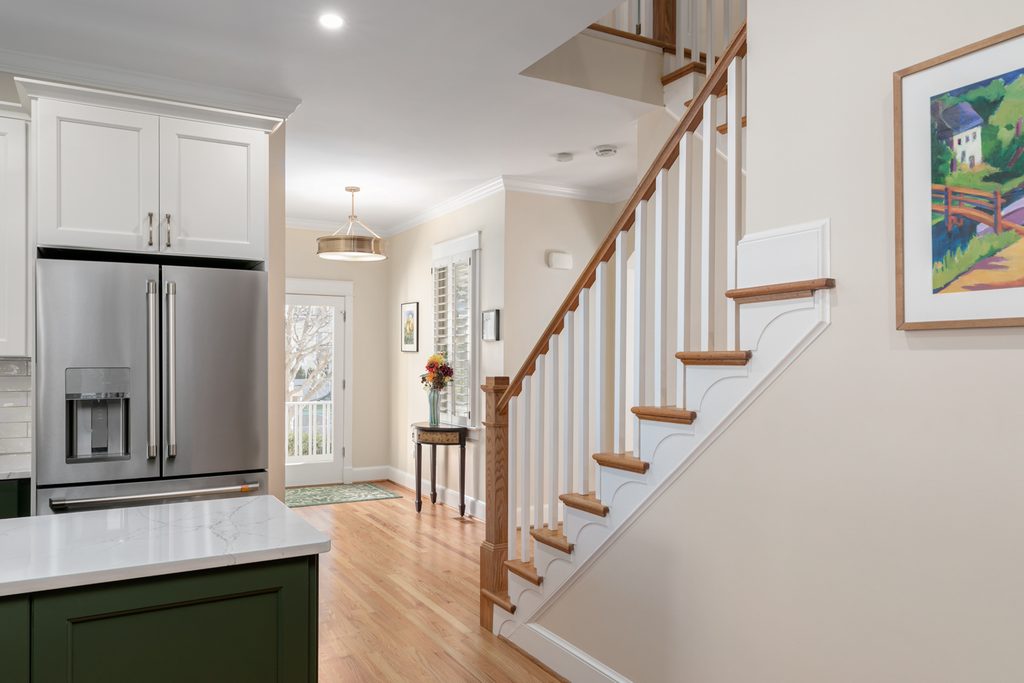
- Floor: we patched new oak into the existing hardwoods and sanded the main level, upper hall, and both staircases as one field, finished as natural oak with no stain.
- Stairs: white risers and turned newel posts keep the oak warm and the white crisp.
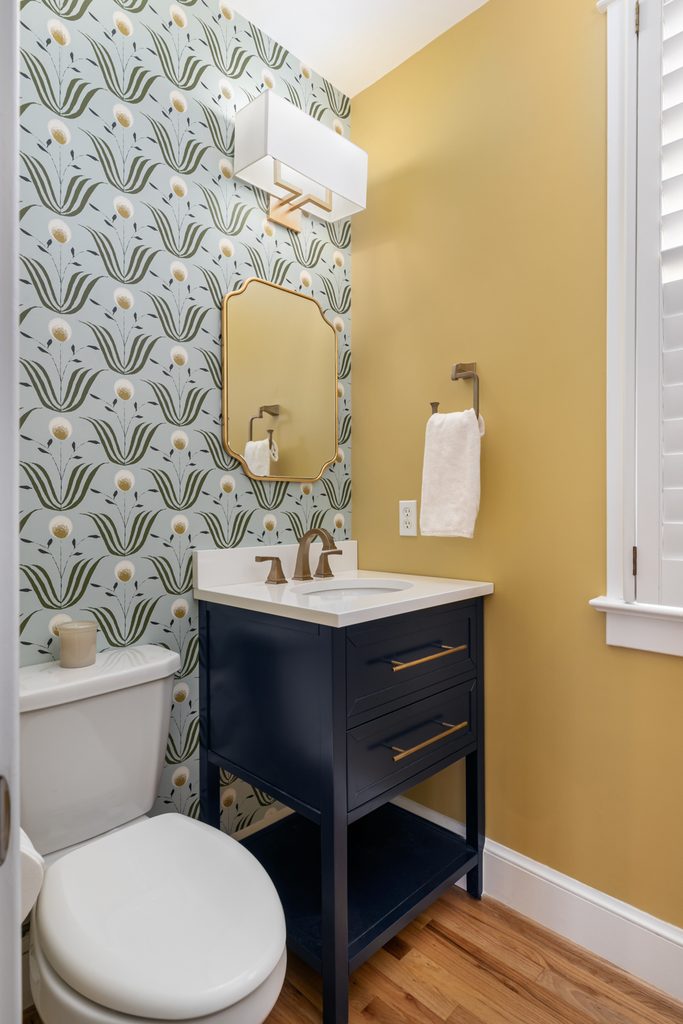
- Powder room: a midnight navy free-standing vanity, floral wallpaper, and champagne bronze fixtures repeat the metals in a new color story.
The Warmth at a Glance
Here is how each element in this Arlington kitchen adds warmth:
| Element | Choice | What it does |
|---|---|---|
| Base cabinets and island | Deep hunter green | Grounds the room with color |
| Upper cabinets | Soft white | Keeps the room bright |
| Range hood | Walnut-stain wood | Makes wood the centerpiece |
| Hardware and faucet | Honey and champagne bronze | Adds a warm metal thread |
| Backsplash | Classic 3×12 subway tile | Lets color and wood lead |
| Lighting | Recessed, under-cabinet, display, and sconce | Layers the glow |
| Flooring | Natural oak, one continuous finish | Carries warmth through the house |
| Powder room | Navy vanity, floral wallpaper, bronze fixtures | Extends the palette into a small room |
Want to see the finished rooms? Browse the photos and full material list for this green kitchen in Arlington in our project portfolio.
Planning your own kitchen? Our design-build team handles kitchen remodeling across Northern Virginia, from the first sketch to the final walkthrough. Book a free design consultation for a no-pressure conversation about what’s possible for your space.
How to Make a Kitchen Feel Warm: FAQs
Is a green kitchen warm or cool?
It depends on the green and what surrounds it. A deep green with a yellow undertone, paired with natural wood and bronze metals, feels warm. The same green beside chrome and gray stone feels cooler. Our guide to color palettes explains how undertones work.
How can I make a white kitchen feel warm without repainting the cabinets?
Add warmth around the cabinets instead of to them. Introduce wood through a floor, hood, or open shelves. Swap cool hardware for bronze or brass. Layer the lighting so surfaces glow rather than glare. These changes can transform a white kitchen without touching the cabinet doors.
What wood tones go with green cabinets?
Walnut and natural oak both pair well with deep green. Walnut adds richness, while natural oak keeps the room light. Limit yourself to one or two wood tones, and repeat each in more than one place so the wood looks planned.
Do glass-front cabinets make a kitchen feel more open or more cluttered?
Open, if you keep them edited. Light the inside, display a small number of pieces you love, and leave breathing room between them. A few glass-front doors among solid ones add depth and interest without turning the wall into a busy display.


