
Mid century modern kitchens are loved for their warmth, simple lines, and easy-going color. The challenge is getting the look right. Lean too hard on the past and the room feels like a museum set. Lean too modern and the character disappears. The best mid century modern kitchen ideas borrow the era’s best qualities and pair them with how families cook today.
Below, we share seven lessons from a kitchen remodel our team recently designed and built in Falls Church, Virginia. The homeowners wanted a kitchen that felt true to the mid century character of their home, with warm wood, quiet color, and natural materials, while still working as an everyday cooking and gathering space. Here is how we balanced both.
1. Start With Warm Wood and Flat Slab Doors
Wood is the heart of a mid century modern kitchen, and walnut is the classic choice. Its rich, warm grain sets the tone for the whole room. Just as important is the door style. Flat slab doors, with no raised panels or frames, create the long, clean horizontal lines the era is known for.
In this kitchen, natural walnut slab cabinets run along the main walls. The flat faces let the grain do the decorating, so the room needs very little else to feel finished. If you are weighing door styles, our guide to choosing a cabinet style explains how slab doors compare to shaker and raised-panel designs.
2. Pair the Wood With One Era-True Color
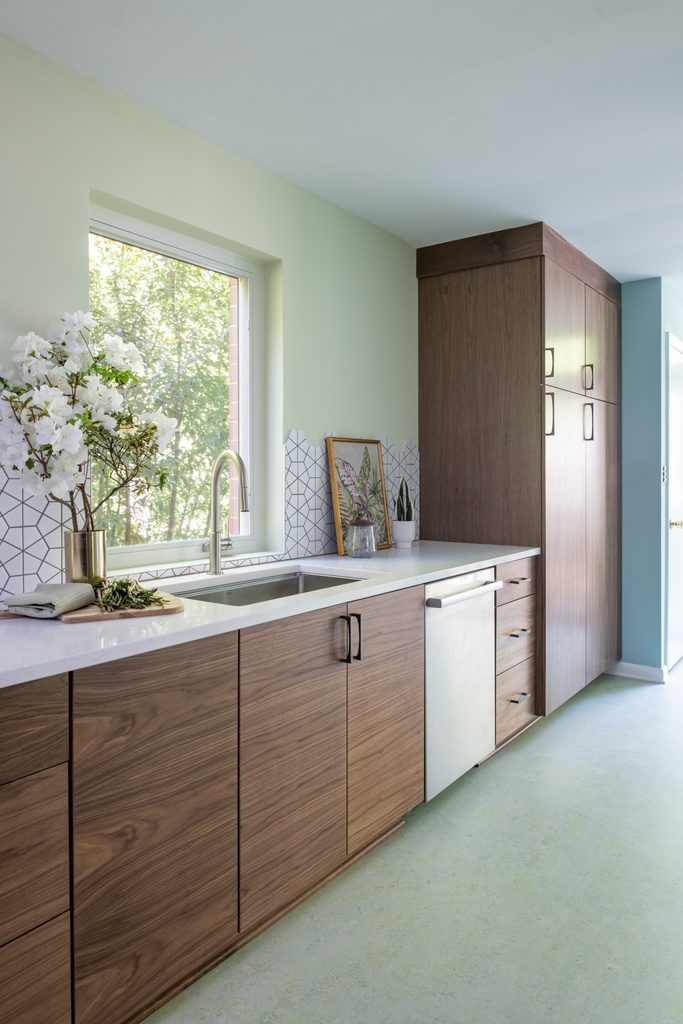
An all-wood kitchen can feel heavy. The mid century answer is a single painted color that plays against the wood. Soft blue-greens, sage, and aqua are all true to the era and work beautifully beside walnut.
Here, we painted an accent run of cabinets in Sherwin-Williams Watery, a gentle blue-green, using the same slab door style as the walnut. Because the door shape matches, the two finishes read as one designed system rather than two separate ideas. Soft ash gray pulls on every cabinet tie them together further.
Try this: Keep the door style the same across your wood and painted cabinets. Changing only the finish, not the shape, is what makes a two-tone kitchen look intentional.
3. Build a Soft, Nature-Inspired Palette
Mid century design often drew color from nature: greens, blues, and warm earth tones. The trick is to keep those colors related, so they layer instead of competing. Choose shades that share an undertone, and let each one cover a different surface. In this kitchen, three layers of color work together:
- Walls: the same soft blue-green as the painted cabinets on three walls.
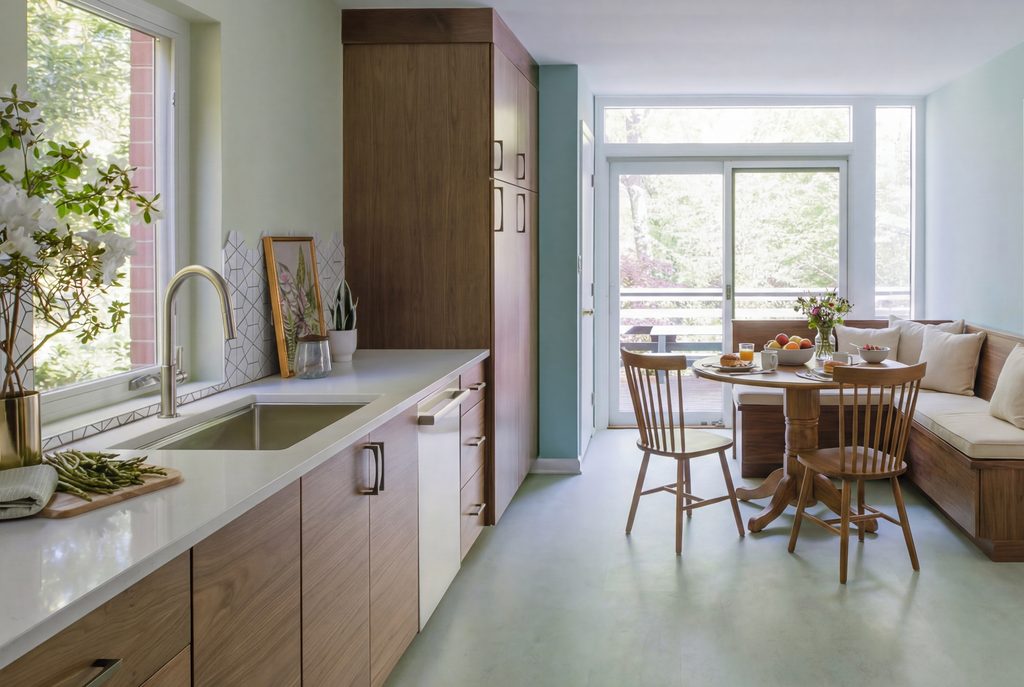
- Window wall: a light celery green that warms the natural light coming in.
- Floor: a soft green natural linoleum that grounds the room.
Together with the walnut, these colors feel calm and connected, never loud.
4. Keep the Backsplash Quiet
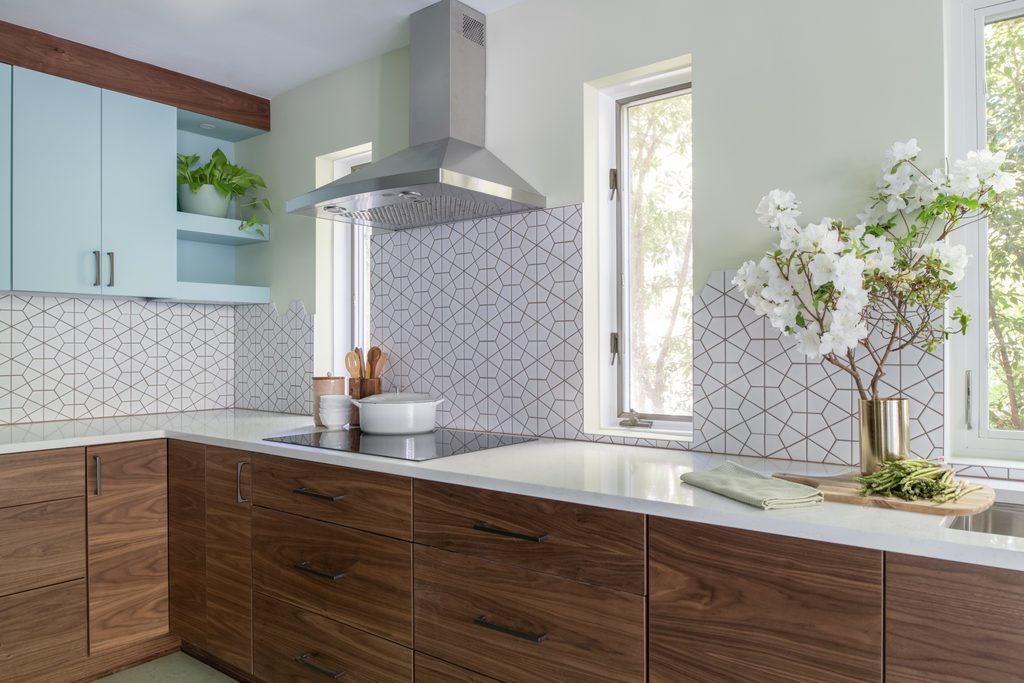
With warm wood and soft color already in play, the backsplash should add texture, not more color. A simple, light tile gives the eye a resting place and keeps the room bright.
In this kitchen, we used a white matte porcelain mosaic with a warm, mocha-toned grout. The grout picks up the walnut’s color, so the tile feels connected to the cabinets. The tile runs up to the bottom of the wall cabinets on two walls and up to the hood on the cooking wall. For more options, see our backsplash tile ideas.
5. Choose Flooring That Fits the Era
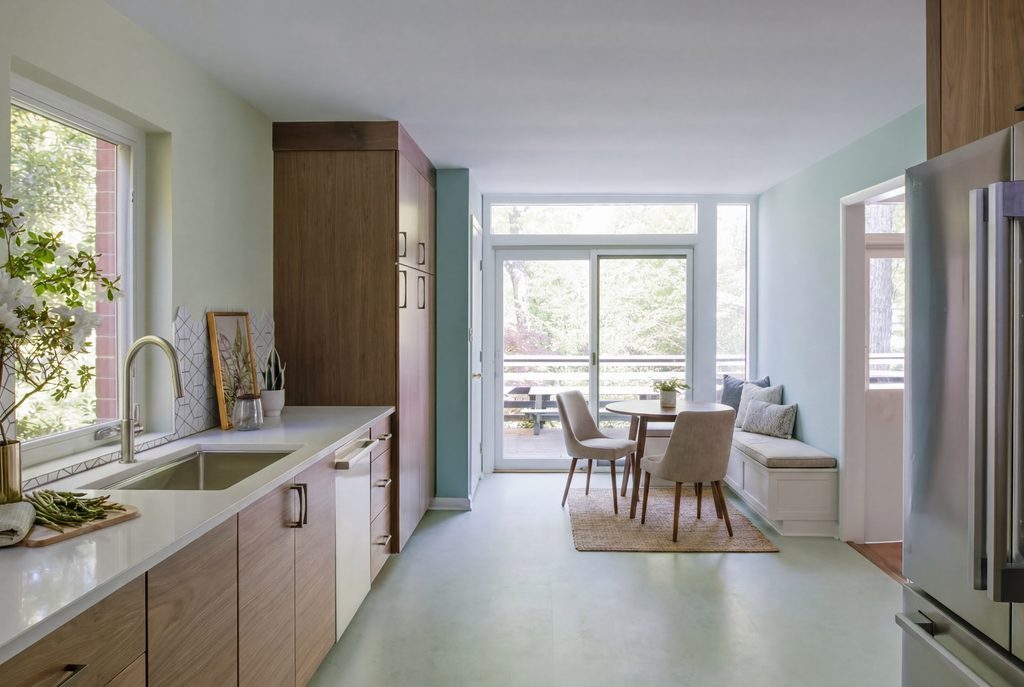
Flooring is easy to overlook, but it can make or break a period look. Many original mid century kitchens had linoleum floors, and natural linoleum is still a smart choice today. Made from natural materials such as linseed oil, it comes in soft, era-friendly colors and handles daily kitchen traffic well.
Here, we installed natural linoleum tiles in a soft green as a floating floor with a click-together system. To give it a flat, solid base, we laid new plywood over the existing subfloor first. The floor then flows into the dining room and hallway with clean transitions.
6. Keep Lines Long and Appliances Out of Sight
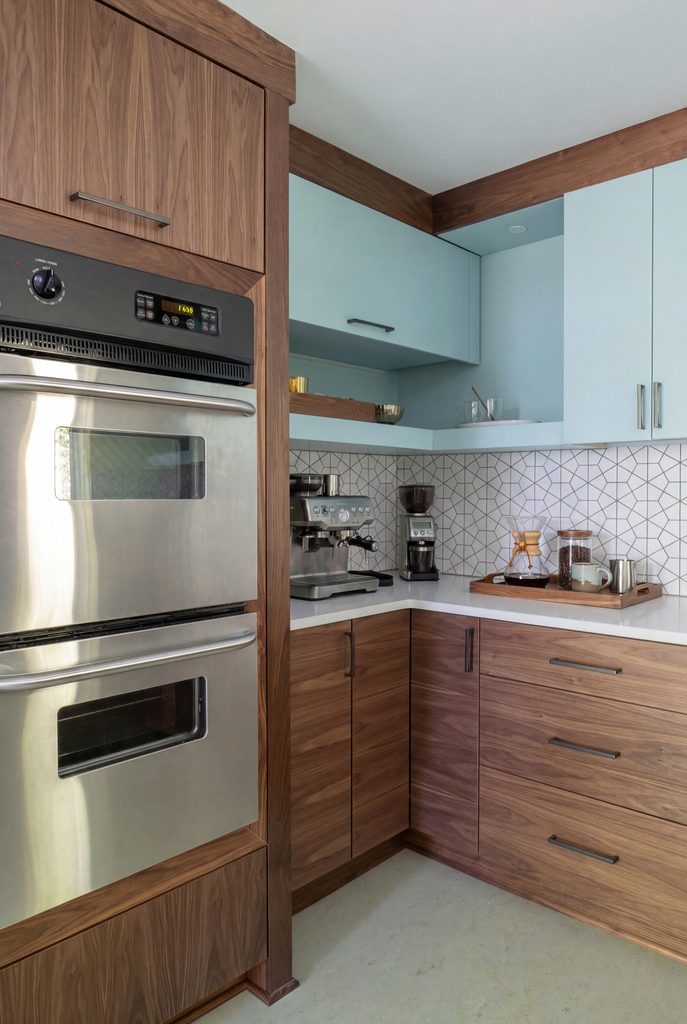
Clean, uninterrupted lines are central to mid century style, and bulky appliances break them up. The fix is to group the big pieces into one tall wall and keep the rest of the kitchen low and horizontal. This project does it in three ways:
- A tall walnut pantry wall: it holds the wall ovens, refrigerator, and microwave, with pull-out trays inside each tall cabinet and a pegboard drawer for organizing.
- A flat induction cooktop: it sits flush with the counter, keeping the horizontal line unbroken, under a sleek chimney hood. Our kitchen hood style guide covers other options.
- A workstation sink: a large stainless sink with built-in accessories keeps prep tools off the counters.
7. Bring in Daylight, Then Layer the Lighting
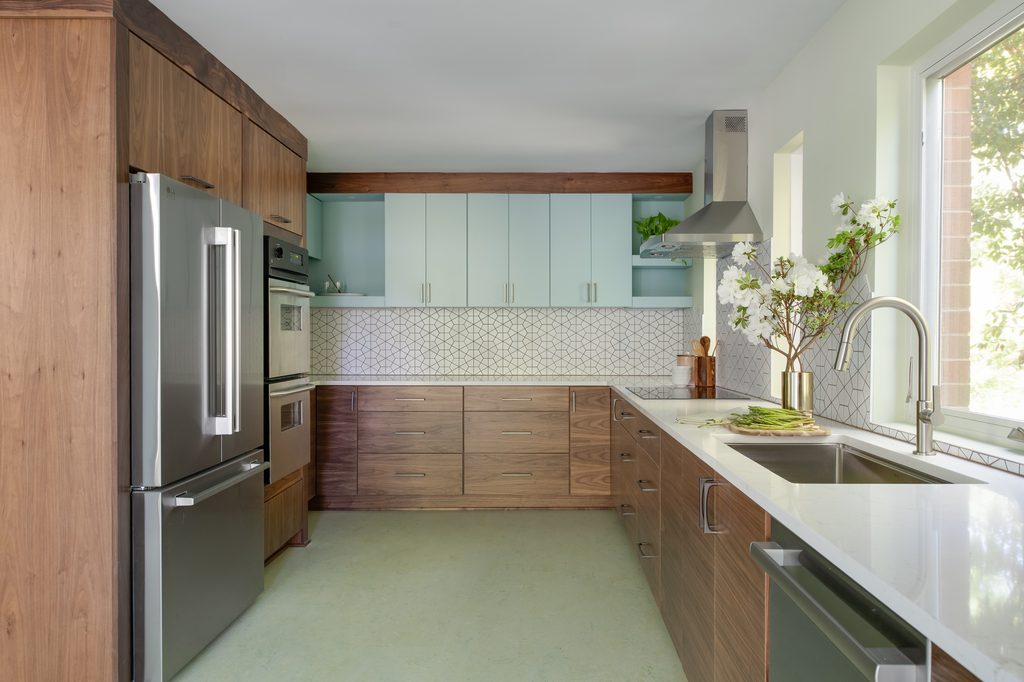
Walnut and soft color look their best in good light. In this kitchen, we framed a new casement window into the front wall to pull more daylight onto the sink and cooktop. It was one of the simplest changes in the project, and one of the most noticeable. We covered more ways to do this in how to brighten a dark kitchen.
For evenings, the lighting is layered and on dimmers: recessed lights overhead, smaller lights over the cooking wall, under-cabinet and under-shelf lights for the counters, and a light over the sink. A long, linear walnut wall sconce adds a warm, era-appropriate glow and echoes the cabinets.
The Mid Century Kitchen at a Glance
Here is how each element in this kitchen supports the mid century look:
| Element | Choice | Why it works |
|---|---|---|
| Cabinets | Natural walnut slab doors | Warm wood and clean lines |
| Accent cabinets | Soft blue-green paint, same door style | One era-true color |
| Walls | Blue-green and celery green | Related, nature-inspired tones |
| Backsplash | White matte mosaic, warm grout | Texture without extra color |
| Floor | Soft green natural linoleum | True to the era, easy to live with |
| Appliances | Tall pantry wall, flush induction | Keeps lines long and clean |
| Light | New window, layered dimmable lights | Shows off wood and color |
Want to see the finished kitchen? Browse the photos and full details of this mid century modern kitchen in Falls Church in our project portfolio.
Love the mid century look? Our design-build team handles kitchen remodeling across Northern Virginia, from period-inspired designs to fully modern ones. Book a free design consultation for a no-pressure conversation about what’s possible for your space.
Mid Century Modern Kitchen Ideas: FAQs
What colors were popular in mid century modern kitchens?
Soft, nature-inspired colors were common, including sage and olive greens, aqua and blue-green, mustard yellow, and warm oranges. Today, the most livable approach is to pick one or two of these as accents against warm wood and light neutrals, rather than using them everywhere.
What cabinet hardware suits a mid century modern kitchen?
Look for simple, slim pulls with clean lines and little ornament. Low-sheen finishes, such as brushed metals or soft grays, work well against walnut. Using the same pull style on every cabinet, sized to each door or drawer, keeps the look calm and consistent.
How do I get a mid century look without the kitchen feeling dated?
Borrow the era’s style, not its limitations. Keep the warm wood, slab doors, and soft colors, then pair them with modern performance: durable quartz counters, an induction cooktop, LED lighting on dimmers, and smart storage inside the cabinets. The result feels period-inspired but works like a new kitchen.
What countertops go with walnut cabinets?
Light countertops balance walnut’s deep tone best. A white quartz with soft veining, like the polished quartz in this project, keeps the room bright and is easy to care for. Simple eased edges suit mid century style better than ornate profiles.


